 Best
BestDisclosure: We are reader-supported. If you purchase from a link on our site, we may earn a commission, Learn More
Deel vs Remote in 2026: Which Global Hiring Platform Comes Out on Top?
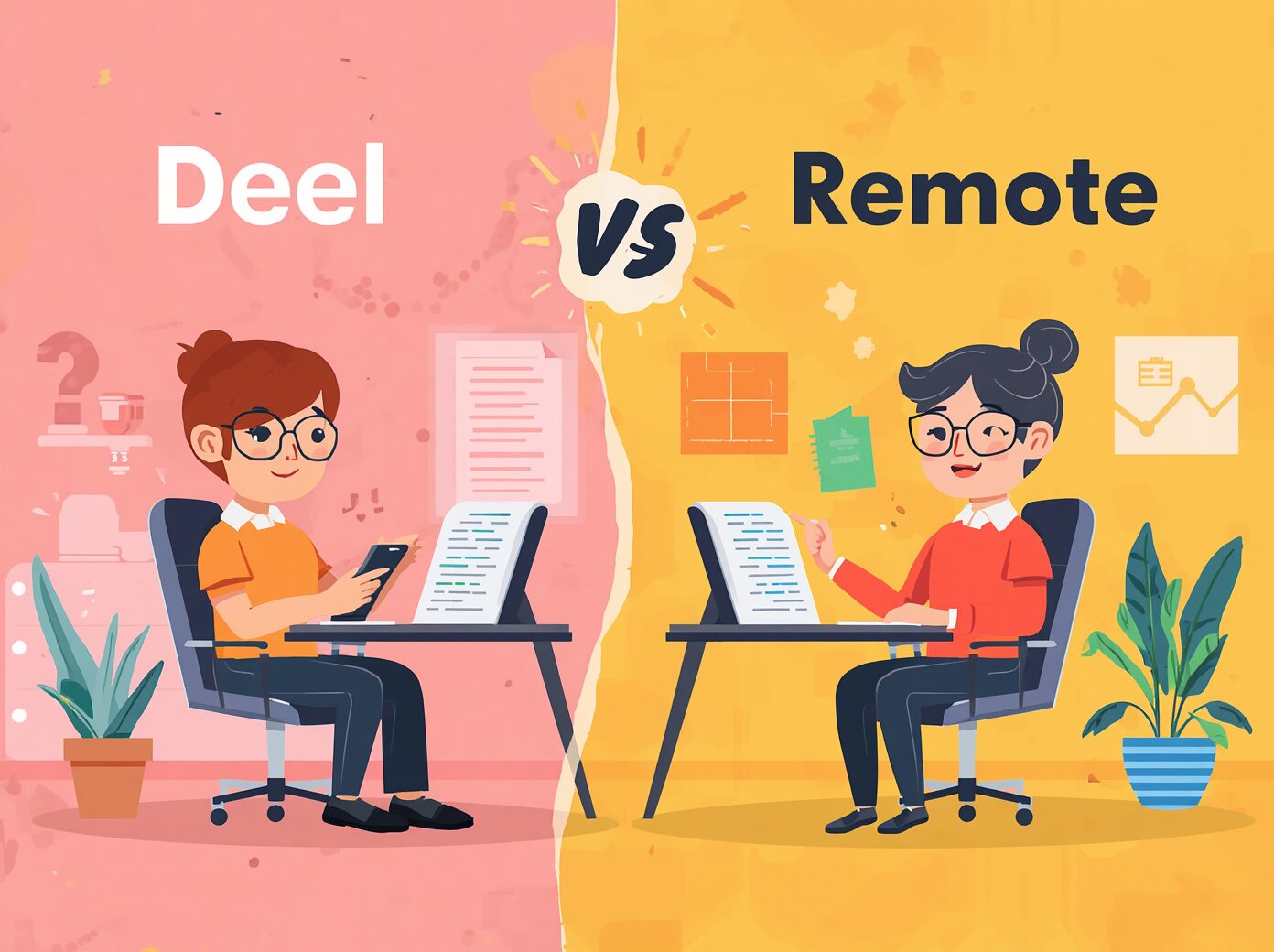
The way companies hire has changed dramatically over the past few years. Businesses are no longer limited to hiring talent within commuting distance of a physical office. Today, a startup based in Singapore can employ developers in Eastern Europe, designers in Latin America, and support teams in Southeast Asia without opening international offices.
Remote work has transformed hiring from a local process into a global strategy.
But while global hiring creates access to better talent and lower operational costs, it also introduces serious complexity. Companies suddenly need to deal with:
- International payroll
- Tax compliance
- Employment laws
- Contractor agreements
- Benefits administration
- Currency conversions
- Intellectual property protection
Managing these processes manually becomes difficult very quickly.
That is why Employer of Record (EOR) platforms like Deel and Remote have become essential tools for modern businesses.
Both platforms promise to simplify global hiring by helping companies legally employ workers across multiple countries without establishing local legal entities. Both offer payroll solutions, compliance management, contractor payments, onboarding systems, and HR support.
On paper, the two companies appear very similar.
However, once businesses begin evaluating them seriously, major differences become clear. Deel and Remote are built around different operational philosophies, different infrastructure strategies, and different priorities.
Some companies prefer Deel because of its flexibility, advanced features, and contractor-friendly ecosystem. Others choose Remote because of its compliance-focused structure and cleaner operational approach.
The right platform depends entirely on what a company values most.
This in-depth comparison explores the strengths, weaknesses, pricing, features, integrations, compliance systems, and real-world usability of Deel vs Remote to help businesses choose the best global hiring platform in 2026.
Quick Comparison: Deel vs Remote
| Feature | Deel | Remote |
|---|---|---|
| Founded | 2019 | 2019 |
| Core Focus | Payroll & contractor infrastructure | Compliance-first global employment |
| EOR Services | Yes | Yes |
| Contractor Management | Excellent | Very Good |
| Payroll Coverage | 150+ countries | 100+ countries |
| Owned Legal Entities | Partial | Extensive |
| Integrations | Extensive | Moderate |
| Interface Style | Feature-rich | Minimal & clean |
| Best For | Scaling startups | Compliance-focused businesses |
| Pricing Transparency | Moderate | Strong |
Understanding Deel
Deel grew rapidly during the global remote-work boom by solving one major problem: paying international contractors quickly and legally.
At first, Deel became especially popular among startups and technology companies hiring freelancers across multiple countries. The platform simplified contracts, automated invoices, and supported flexible payment methods.
As demand increased, Deel expanded aggressively into: 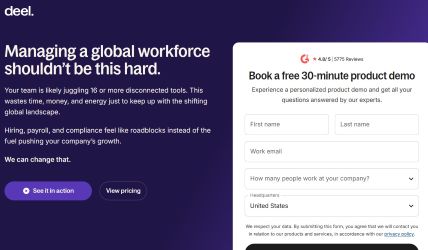
- Employer of Record services
- Global payroll
- HR management
- Immigration support
- Workforce analytics
- Equipment management
- Equity administration
- Compliance infrastructure
Today, Deel positions itself as a complete workforce management platform rather than simply a payroll provider.
Deel Strengths
- Excellent contractor management
- Fast onboarding
- Extensive integrations
- Advanced enterprise features
- Flexible international payouts
- Broad operational scalability
Deel Weaknesses
- Can feel overwhelming for smaller teams
- Pricing may increase significantly at scale
- Some regional support inconsistency
- Compliance structure partly relies on partner networks
Deel’s biggest advantage is flexibility. The platform moves fast, adapts quickly, and supports highly complex global workforce structures.
Understanding Remote
Remote entered the market with a different approach.
Rather than focusing primarily on contractor flexibility, Remote positioned itself as a compliance-first employment platform designed around legal certainty and infrastructure ownership.
Remote became known for: 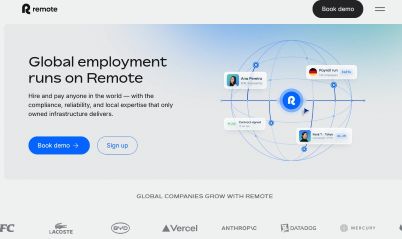
- Strong compliance systems
- Owned legal entities
- Transparent employment structures
- Intellectual property protection
- Simplified workflows
The company consistently emphasizes reducing legal risk for businesses hiring internationally.
Remote Strengths
- Strong compliance infrastructure
- Clean and simple interface
- Transparent pricing
- Excellent legal guidance
- Consistent onboarding experiences
Remote Weaknesses
- Smaller integration ecosystem
- Less contractor payout flexibility
- Fewer advanced operational tools
- Slower expansion into some markets
Remote’s strength lies in operational clarity. The platform prioritizes legal reliability and straightforward HR management over feature-heavy complexity.
Employer of Record (EOR) Comparison
Employer of Record services are the foundation of both platforms.
An EOR allows companies to hire employees internationally without opening local subsidiaries. The EOR becomes the official legal employer while the client company manages the employee’s day-to-day work.
Without EOR platforms, businesses would need to:
- Register foreign entities
- Manage local payroll systems
- Handle tax compliance independently
- Understand local labor laws
- Administer benefits country by country
That process is expensive, slow, and legally risky.
Both Deel and Remote solve this problem effectively, but they use different infrastructure models.
| EOR Category | Deel | Remote |
|---|---|---|
| Countries Supported | 100+ | 100+ |
| Expansion Speed | Very Fast | Fast |
| Owned Entities | Partial | Extensive |
| Third-Party Reliance | Moderate | Low |
| Compliance Structure | Strong | Very Strong |
| Enterprise Trust | High | High |
| Best Use Case | Fast expansion | Compliance-focused hiring |
Deel’s EOR Model
Deel uses a hybrid approach combining owned entities with local partners.
This strategy allows Deel to:
- Expand rapidly into new countries
- Enter emerging markets faster
- Offer flexible hiring solutions
- Scale operationally at high speed
For startups hiring globally across multiple regions, this flexibility is valuable.
However, some enterprises worry that relying on local partners may create inconsistencies in:
- Support quality
- Compliance standards
- Employee onboarding experiences
Deel still maintains strong compliance systems overall, but its infrastructure prioritizes scalability and speed.
Remote’s EOR Model
Remote strongly emphasizes direct ownership of legal entities.
The company believes controlling infrastructure internally improves:
- Compliance consistency
- Legal transparency
- Employee protections
- Intellectual property security
For regulated industries such as fintech, healthcare, cybersecurity, and enterprise software, this model often feels safer.
The tradeoff is operational speed. Building owned legal infrastructure country by country is slower and more expensive.
In simple terms:
- Deel optimizes for flexibility and expansion speed.
- Remote optimizes for control and legal certainty.
Contractor Management: Deel Has a Clear Advantage
Contractor management remains one of Deel’s strongest categories.
The platform was originally designed for international freelancers and independent contractors, and that focus still shows in the product experience.
| Contractor Feature | Deel | Remote |
|---|---|---|
| Freelancer Experience | Excellent | Good |
| Payment Flexibility | Excellent | Moderate |
| Crypto Support | Yes | Limited |
| Invoice Automation | Strong | Strong |
| Withdrawal Methods | Extensive | Moderate |
| Contractor Onboarding | Very Smooth | Smooth |
Deel supports a wide range of payout methods including:
- Wise
- PayPal
- Payoneer
- Revolut
- Bank transfers
- Cryptocurrency
- Deel debit cards
 This flexibility makes Deel extremely popular among:
- SaaS startups
- Agencies
- Web3 companies
- Creative businesses
- Freelancer-heavy organizations
Remote also handles contractors effectively, but the system feels more structured and compliance-focused.
For companies managing large contractor networks, Deel usually delivers the better operational experience.
Payroll Infrastructure Comparison
Managing payroll across multiple countries becomes extremely complicated very quickly.
Each country has:
- Different tax systems
- Different labor laws
- Different social contribution rules
- Different public holiday requirements
- Different reporting obligations
Both Deel and Remote centralize payroll into unified dashboards, but their systems are designed differently.
| Payroll Category | Deel | Remote |
|---|---|---|
| Payroll Automation | Excellent | Very Good |
| Multi-Currency Support | Extensive | Extensive |
| Reporting Features | Advanced | Moderate |
| Payroll Simplicity | Moderate | Excellent |
| Enterprise Scalability | Excellent | Strong |
| Finance Integrations | Strong | Good |
Deel Payroll
Deel’s payroll infrastructure is highly scalable and feature-rich.
The platform supports:
- Contractors
- EOR employees
- Direct employees
- Equity compensation
- Multi-country payroll
- Advanced financial reporting
For enterprise organizations with complicated workforce structures, Deel’s depth is impressive.
However, smaller businesses sometimes find the interface overly complex.
The platform prioritizes operational flexibility over simplicity.
Remote Payroll
Remote’s payroll system is cleaner and easier to navigate.
The company focuses heavily on:
- Simplicity
- Transparency
- User-friendly workflows
- Reduced operational friction
Smaller HR teams often prefer Remote because:
- Reports are easier to understand
- Navigation feels simpler
- Onboarding requires less training
Remote may not offer the same level of operational complexity as Deel, but many businesses simply do not need those advanced features.
Compliance and Legal Protection
 Compliance is arguably the most important category in international hiring.
One serious compliance mistake can lead to:
- Government penalties
- Tax issues
- Worker misclassification lawsuits
- Intellectual property disputes
- Employment conflicts
This is where Remote has built its strongest reputation.
| Compliance Area | Deel | Remote |
|---|---|---|
| Worker Classification | Strong | Excellent |
| Legal Transparency | Moderate | Excellent |
| Intellectual Property Protection | Good | Excellent |
| Audit Readiness | Good | Excellent |
| Labor Law Guidance | Strong | Strong |
| Compliance Infrastructure | Strong | Excellent |
Why Remote Wins on Compliance
Remote consistently positions itself as a legally structured employment platform rather than just payroll software.
The company emphasizes:
- Direct entity ownership
- Country-specific legal expertise
- Transparent employment contracts
- IP ownership clarity
- Strong labor law guidance
For companies operating in regulated industries, this matters enormously.
Many enterprises choose Remote specifically because of its compliance-first philosophy.
Deel’s Compliance Position
Deel still provides strong compliance capabilities, and many global businesses trust the platform.
However, its operational model prioritizes speed and expansion flexibility. Some legal teams prefer Remote’s more controlled infrastructure approach.
This does not mean Deel lacks compliance quality. It simply approaches international hiring from a more operationally agile perspective.
User Experience and Platform Design
Software usability directly affects HR productivity.
A platform used daily by payroll teams, HR departments, finance managers, and operations leaders needs to reduce complexity rather than create it.
| UX Category | Deel | Remote |
|---|---|---|
| Dashboard Simplicity | Moderate | Excellent |
| Feature Depth | Excellent | Good |
| Learning Curve | Medium | Low |
| Navigation | Complex | Clean |
| Enterprise Customization | Strong | Moderate |
Deel feels like a powerful workforce operating system.
The platform includes:
- Payroll systems
- Compliance management
- HR tools
- Immigration support
- Equipment tracking
- Workforce analytics
- Financial infrastructure
Large organizations appreciate this operational depth.
However, startups and smaller teams may initially feel overwhelmed by the number of features and menus.
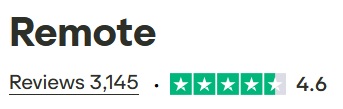
Remote focuses on simplicity and clarity.
The interface feels:
- Cleaner
- Easier to navigate
- Less cluttered
- Faster to learn
For businesses without large HR operations teams, this simplicity becomes a major advantage.
In practical terms:
- Deel feels enterprise-heavy.
- Remote feels operationally streamlined.
Pricing Comparison
Pricing is one of the most important considerations for growing companies.
Neither Deel nor Remote is inexpensive, especially at scale.
However, there are differences in pricing structure and transparency.
| Pricing Category | Deel | Remote |
|---|---|---|
| Transparency | Moderate | Strong |
| Enterprise Scaling Costs | Higher | Moderate |
| Contractor Pricing | Competitive | Competitive |
| Add-On Complexity | Medium | Lower |
| Predictability | Moderate | Strong |
Deel Pricing
Deel’s pricing depends heavily on:
- Country
- Employment structure
- Payroll requirements
- Compliance complexity
- Additional services
Some businesses appreciate this flexibility.
Others dislike the unpredictability of scaling costs.
Remote Pricing
Remote is generally viewed as more transparent and easier to budget for.
For startups with tighter financial controls, this predictability can be valuable.
Still, companies should evaluate platforms based on total operational value rather than monthly subscription costs alone.
A more expensive platform that saves HR hours and prevents compliance mistakes may ultimately be cheaper long-term.
Integrations and Ecosystem
Modern businesses rely heavily on connected software systems.
Global payroll platforms need to integrate with:
- HR systems
- Accounting software
- Communication platforms
- Applicant tracking systems
- Expense management tools
| Integration Category | Deel | Remote |
|---|---|---|
| HRIS Integrations | Extensive | Moderate |
| Accounting Tools | Strong | Good |
| ATS Integrations | Strong | Moderate |
| API Flexibility | Excellent | Good |
| Enterprise Ecosystem | Excellent | Moderate |
Deel integrates with platforms including:
- Slack
- BambooHR
- Workday
- Greenhouse
- QuickBooks
- NetSuite
- Xero
For enterprise businesses with complex software ecosystems, Deel clearly has the advantage.
Customer Support Comparison
Customer support becomes extremely important when handling payroll and compliance internationally.
| Support Area | Deel | Remote |
|---|---|---|
| Response Speed | Fast | Moderate |
| Legal Guidance | Strong | Excellent |
| Onboarding Support | Excellent | Very Good |
| Regional Consistency | Moderate | Strong |
| Enterprise Assistance | Strong | Strong |
Deel Support
Deel is often praised for:
- Fast onboarding
- Responsive account managers
- Operational execution speed
However, rapid expansion occasionally creates inconsistencies between regions.
Remote Support
Remote’s support is more consultative and compliance-focused.
The company often spends more time helping businesses understand:
- Labor laws
- Employment structures
- Compliance obligations
- Legal risks
For risk-sensitive companies, this approach can feel more valuable.
Which Platform Is Better for Startups?
Startups usually prioritize:
- Fast onboarding
- Contractor flexibility
- International scalability
- Lower operational friction
Choose Deel If:
- You hire many contractors
- You scale aggressively
- You need flexible payouts
- You want advanced integrations
- You operate globally from day one
Choose Remote If:
- Compliance is your biggest concern
- You hire mostly full-time employees
- You prefer simpler systems
- You want predictable pricing
- You value legal clarity
Which Platform Is Better for Enterprises?
Enterprise organizations care more about:
- Governance
- Audit readiness
- Workforce standardization
- Reporting consistency
- Legal protection
Deel Is Better For:
- Complex global workforce operations
- Large integration ecosystems
- Enterprise payroll flexibility
- Multi-country scaling
Remote Is Better For:
- Compliance-heavy industries
- Audit-sensitive organizations
- Legal transparency
- Structured international employment
Best Overall for Most Companies:
🏆 Deel
Best for Compliance & Legal Protection:
🛡️ Remote
Deel is often viewed as the more complete and scalable global workforce platform for fast-growing companies, while Remote is widely recognized for its compliance-focused infrastructure and structured international hiring approach.